
Reconstruction of a Missing Nose Using Pre-Fabricated Forehead Flap Rhinoplasty in a 12-Year-Old Patient
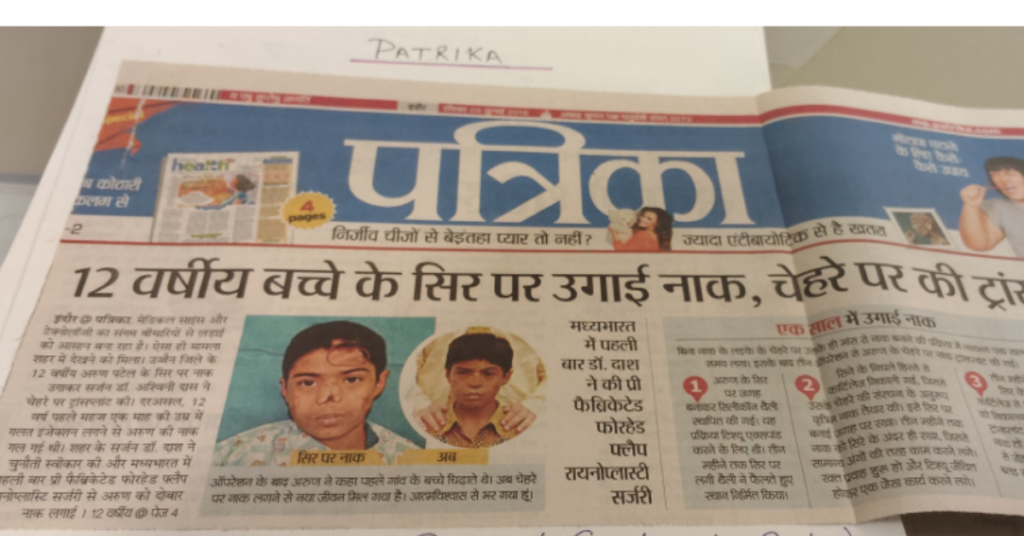
Patient's Initial Condition
Symptoms / Health Concerns
The patient was born with a congenital absence of the nose, resulting in the complete lack of a functional nasal structure. This rare condition affected both facial appearance and normal nasal breathing, requiring advanced reconstructive plastic surgery.
Previous Treatments
Since there was no existing nasal framework, conventional rhinoplasty was not a suitable treatment option. A customized reconstructive approach was planned to create a completely new nose.
Diagnosis
Final Diagnosis
Congenital absence of the nose (complete nasal defect) requiring full functional and aesthetic nasal reconstruction.
Treatment Details
The patient underwent Pre-Fabricated Forehead Flap Rhinoplasty, an advanced reconstructive plastic surgery technique used to create a completely new nose. Due to the complexity of the case, the treatment was completed in three carefully planned surgical stages over approximately one year.
Stage 1: Forehead Tissue Expansion
A silicone tissue expander was placed beneath the skin of the forehead to gradually stretch healthy tissue over the next three months. This created sufficient skin for the future nasal reconstruction.
Stage 2: Fabrication of the New Nose
After adequate tissue expansion, cartilage was harvested from the lower chest and sculpted into a customized nasal framework based on the patient's facial proportions. The newly created nose was placed beneath the expanded forehead tissue, where it remained for approximately three months to develop a healthy blood supply.
Stage 3: Final Nasal Reconstruction
In the final stage, the reconstructed nose was carefully transferred from the forehead to its natural position on the face. Microsurgical techniques were used to connect the blood vessels and surrounding tissues, ensuring long-term survival of the reconstructed nose while restoring both appearance and nasal function.
Duration: Approximately 12 months.
Advanced Techniques Used
• Pre-Fabricated Forehead Flap Rhinoplasty
• Pre-Fabricated Forehead Flap Rhinoplasty
• Forehead Tissue Expansion
• Autologous Cartilage Grafting from the Lower Chest
• Microsurgical Reconstruction
• Staged Nasal Reconstruction
• Pre-Fabricated Forehead Flap Rhinoplasty
• Forehead Tissue Expansion
• Autologous Cartilage Grafting from the Lower Chest
• Microsurgical Reconstruction
• Staged Nasal Reconstruction
• Forehead Tissue Expansion
• Autologous Cartilage Grafting from the Lower Chest
• Microsurgical Reconstruction
• Staged Nasal Reconstruction
Results & Recovery
Patient Improvements
Following the successful staged nasal reconstruction, the patient achieved significant functional and cosmetic improvement.
• Successful reconstruction of a complete, functional nose.
• Restoration of normal nasal breathing.
• Improved facial symmetry and natural appearance.
• Healthy blood supply established within the reconstructed tissue.
• Stable long-term reconstruction with the ability to grow naturally along with facial development.
• Smooth post-operative recovery.
Final Outcome
The procedure successfully restored both the appearance and function of the nose. The reconstructed nasal framework is expected to continue developing proportionately as the child grows, supporting normal facial development and improving overall quality of life.
Returned to Normal Activities: Yes
Case Highlights
What Makes This Case Unique
This was a highly complex congenital nasal reconstruction in which no natural nasal framework was present. Instead of performing conventional rhinoplasty, the surgical team created an entirely new nose using Pre-Fabricated Forehead Flap Rhinoplasty, a rare and advanced reconstructive technique performed in multiple carefully planned stages.
Complex / Rare Factors
Yes. The patient had a rare congenital absence of the nose, making standard rhinoplasty impossible. The case required customized planning, tissue expansion, cartilage framework creation, microsurgical reconstruction, and staged surgery over one year.
Most Significant Benefit
Successful creation of a functional, natural-looking nose that restored breathing, facial balance, and supports continued facial growth throughout childhood.
Conclusion
This case highlights how advanced reconstructive plastic surgery can successfully treat rare congenital nasal defects through meticulous planning and innovative surgical techniques. Using Pre-Fabricated Forehead Flap Rhinoplasty, Dr. Ashwini Dash was able to reconstruct a completely new nose, restoring both nasal function and facial aesthetics.
For patients with complex nasal deformities, congenital nasal defects, or severe facial reconstruction needs, specialized reconstructive plastic surgery can provide life-changing functional and cosmetic outcomes. Early evaluation by an experienced reconstructive plastic surgeon allows personalized treatment planning and the best possible long-term results.